

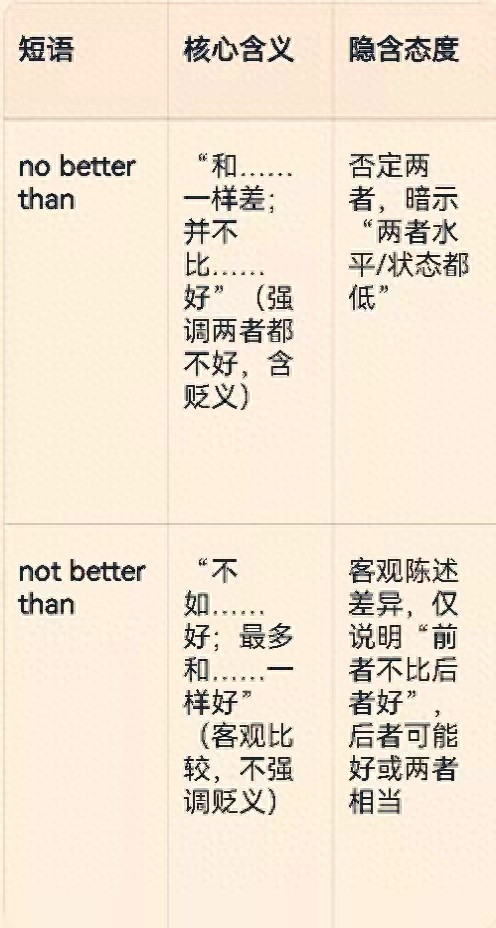
一、核心含义对比
二、详细用法及例句解析
(一)no better than 的用法
核心功能:表“两者都差”,含主观贬义,强调“前者和后者一样糟糕”
句式结构:主语 + be动词/实义动词 + no better than + 比较对象(名词/代词/从句)
时态说明:根据语境用一般现在时(描述常态)、一般过去时(描述过去情况)
1. 后接名词(一般现在时,描述能力)
His English is no better than mine.
(他的英语和我的一样差。)
—— 划线部分: 主语(His English) + be动词(is) + no better than + 比较对象(mine) ,一般现在时描述两人英语能力“都不好”的常态。
2. 后接从句(一般过去时,描述行为)
What he did was no better than what the lazy student did yesterday.
(他所做的事和那个懒学生昨天做的一样差。)
—— 划线部分: 主语(What he did) + be动词(was) + no better than + 比较从句(what the lazy student did) ,一般过去时强调“他和懒学生的行为都不好”。
3. 后接实义动词(一般现在时,描述表现)
This new machine works no better than the old one.
(这台新机器和那台旧的一样不好用。)
—— 划线部分: 主语(This new machine) + 实义动词(works) + no better than + 比较对象(the old one) ,一般现在时说明新旧机器“都不好用”。
(二)not better than 的用法
核心功能:客观比较“前者不如后者好”或“两者相当”,无贬义,仅陈述事实
句式结构:主语 + be动词/实义动词 + not better than + 比较对象(名词/代词/从句)
时态说明:可用于一般现在时、现在完成时等,根据语境判断
1. 后接名词(一般现在时,客观比较水平)
Her painting is not better than her sister’s.
(她的画不如她姐姐的好。/ 她的画最多和她姐姐的一样好。)
—— 划线部分: 主语(Her painting) + be动词(is) + not better than + 比较对象(her sister’s) ,一般现在时客观说明两者绘画水平的差异,不暗示“她的画差”。
2. 后接从句(现在完成时,比较结果)
The result of our team has been not better than what we expected.
(我们团队的结果不如我们预期的好。)
—— 划线部分: 主语(The result) + be动词(has been) + not better than + 比较从句(what we expected) ,现在完成时客观陈述“结果”与“预期”的差距,无贬义。
3. 后接实义动词(一般过去时,比较效率)
He finished the work not better than his colleague did last week.
(他完成工作的效率不如他同事上周的效率高。)
—— 划线部分: 主语(He) + 实义动词(finished) + not better than + 比较对象(his colleague did) ,一般过去时客观比较两人“过去完成工作的效率”。
三、关键区别总结
1. 含义态度不同
no better than:贬义,强调“两者都差”(如“A no better than B”= A和B一样糟);
not better than:中性,仅表“A不如B好”或“两者相当”,不否定B的好坏。
2. 语义范围不同
no better than:语义有“上限”(两者都差);
not better than:语义无“上限”(B可能很好,只是A不如B)。
四、练习题及解析
练习题:用 no better than 或 not better than 填空,并说明理由。
1. This cheap phone is ________ that broken one; both can’t make calls.(这部便宜手机______那部坏的,两者都不能打电话。)
2. His math score is ________ his deskmate’s, but his deskmate is the top student in the class.(他的数学成绩______他同桌的,但他同桌是班里的尖子生。)
3. The service in this hotel ________ the one we stayed in last year—both made us angry.(这家酒店的服务______我们去年住的那家——两者都让我们生气。)
4. My cooking skills are ________ my mom’s, so I usually ask her for help.(我的厨艺______我妈妈的,所以我经常向她求助。)
答案及解析
1. 答案:no better than
解析:后句“both can’t make calls”(两者都不能打电话)说明两部手机“都差”,含贬义,符合 no better than “和……一样差”的用法。
2. 答案:not better than
解析:后句“his deskmate is the top student”(同桌是尖子生)说明“同桌成绩好”,前句仅客观陈述“他的成绩不如同桌”,无贬义,用 not better than。
3. 答案:no better than
解析:后句“both made us angry”(两者都让我们生气)强调“两家酒店服务都差”,含贬义,符合 no better than 的用法。
4. 答案:not better than
解析:句子仅说明“我的厨艺不如妈妈”,客观陈述差距,不暗示“妈妈厨艺差”,用 not better than。